The Complete Guide to Gulf Job Scams in 2026 – How to Protect Yourself
If you’re searching for a job in the Gulf right now, you need to read this first.
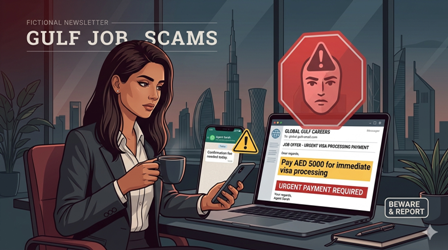
Every week, thousands of job seekers receive messages that seem like dreams come true. “Congratulations! You’ve been selected for a high-paying role in Dubai. Just pay $500 for visa processing, and your ticket will be booked.” Then the money is gone. The “recruiter” disappears. And the dream becomes a nightmare.
The job market in the UAE and Saudi Arabia is booming. By 2026, the region is expected to see significant growth, especially in non-energy sectors. This demand attracts millions of job seekers from around the world. Unfortunately, it also attracts fraudsters who want to take advantage of hopeful candidates.
Why Scams Target Gulf Job Seekers
Dubai, Abu Dhabi, Riyadh, and Doha are magnets for global talent. They offer tax-free salaries, world-class lifestyles, and incredible career opportunities. Fraudsters exploit this demand by posting fake job advertisements that promise high salaries, minimal experience requirements, and instant work visas.
These scams have become incredibly sophisticated. Some fraudsters now use AI-powered bots to conduct fake interviews that feel completely real. Others create professional-looking websites that mimic legitimate recruitment agencies.
The 7 Red Flags You Must Know
- Requests for Upfront Payment
This is the number one indicator of a scam. Legitimate employers never ask candidates to pay for visas, medical tests, training fees, or “guaranteed placement.” If anyone asks for money, stop communication immediately. - Job Offers With No Interview
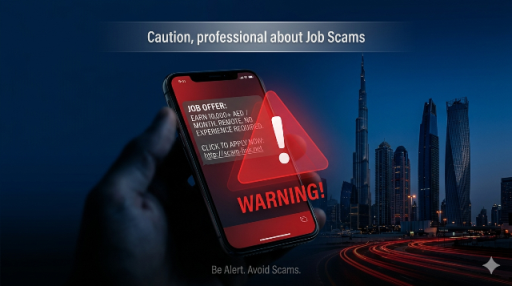
No serious company hires without speaking to the candidate first. Even entry-level roles require basic interaction. If you receive a job offer from a company where you haven’t given any interview, it’s almost certainly a scam. - Too-Good-To-Be-True Salaries
If an offer promises a senior-level salary for minimal experience, be suspicious. Real Gulf salaries are competitive but aligned with market rates. Scammers use unrealistic salary promises to cloud your judgment. - Unprofessional Communication Channels
Legitimate recruiters use official company email domains, not Gmail, Yahoo, or Hotmail. If the entire hiring process happens over WhatsApp or Telegram without professional interviews, that’s a major warning sign. - Pressure and Urgency
“Offer expires in 24 hours!” “Limited slots available!” “Send money now to secure your visa!” These are pressure tactics designed to stop you from thinking logically. Genuine companies give you time to review offers. - The “Tourist Visa Switch” Scam
Some scammers advise you to enter the UAE or Saudi Arabia on a tourist visa, promising to convert it to a work visa after arrival. This is illegal in all Gulf countries. A proper employment visa must be stamped in your passport before you travel. - Vague or Unverifiable Company Details
If the “agency” has no physical address, a recently created website, or no traceable online presence, be very careful. Legitimate agencies have verifiable office addresses, professional websites with history, and active LinkedIn profiles.
How to Verify a Legitimate Job Offer
Before engaging with any recruiter or agency, follow this verification checklist:
Step 1: Digital Footprint Audit
Check the company’s website age using whois.domaintools.com. Scam sites are often less than a year old. Search the agency’s name along with keywords like “scam,” “complaint,” or “fraud”.
Step 2: Official License Verification
A legitimate recruitment consultant must be licensed. In the UAE, check if they are registered with the Ministry of Human Resources and Emiratisation (MoHRE). In Saudi Arabia, verify their license with the Ministry of Human Resources and Social Development (MHRSD).
Step 3: Employer Verification
Ask for the employer’s details. A real consultant will disclose the client company’s name once you are seriously considered. Then verify independently by calling the company’s main public number and asking for HR to confirm they have hired this recruitment agency.
Step 4: Interview Scrutiny
Be wary of text-only interviews on WhatsApp. Legitimate processes involve phone or video calls, often with the hiring company directly.
What to Do If You Suspect a Scam
If something feels wrong, take these steps immediately:
- Stop all communication. Do not reply to further messages.
- Do not send any money or personal documents.
- Report the fake agency to the relevant Gulf country’s Ministry of Labour.
- Report the phone number and email to your local authorities.
- Warn others by posting about your experience on trusted job search forums.
The Golden Rule
No legitimate job in the Gulf will ever ask you for money. Real employers cover visa processing and recruitment costs. If anyone asks for payment, it’s not a job. It’s a scam.
Stay safe, stay smart, and keep applying. Your legitimate Gulf job is out there — and it won’t ask you to pay for the privilege of working.