

How to Spot Fake Job Consultants in the Gulf
Fake job consultants are one of the biggest threats to job seekers in the Gulf. In 2026, these scams have become more sophisticated, leveraging professional-looking websites, fake company profiles, and even deep fake technology in interviews.
The consequences of dealing with a fraudulent recruiter can be devastating. Financial loss from “processing fees” or “visa charges” that legitimate recruiters never demand. Identity theft from providing passport copies, educational certificates, and bank details to criminals. Legal and visa issues from being associated with fake visa applications, which can lead to bans from entering Gulf countries. And emotional distress from wasted time and dashed hopes.
The Hallmarks of a Fake Job Consultant
1. They Ask for Upfront Payments
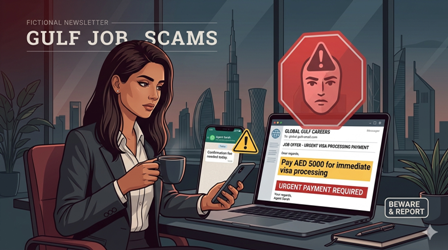
This is the number one rule. Any request for payment is a deal-breaker. They may call it “visa processing,” “administrative fees,” “courier charges,” “interview confirmation,” or “medical insurance deposit.” Reputable recruitment agencies are paid by the hiring company, not the candidate.
2. Communication Is Unprofessional
Primary communication via WhatsApp, Telegram, or personal email accounts like Gmail or Yahoo instead of official company email domains. Messages are full of spelling and grammar errors. They use high-pressure tactics like “Offer expires in 24 hours!” or “Send money now to secure your visa!”
3. The Job Offer Seems Too Good to Be True
An offer for a senior-sounding role with a sky-high salary but minimal experience requirements and a vague job description. They often use names of prestigious real companies but with fake contact details.
4. They Cannot Provide Verifiable Company Details
The “agency” has no physical address, a fake website that was recently created with poor design, and no traceable online presence. They avoid video calls or in-person meetings.
5. They Promote the “Tourist Visa Switch” Scam
They advise you to enter the UAE, Saudi Arabia, or Qatar on a tourist visa, promising to convert it to a work visa after you arrive. This is illegal in all Gulf countries. A proper employment visa must be stamped in your passport by the Gulf country’s embassy in your home country before you travel.
Your Verification Checklist
Step 1: Digital Footprint Audit
Check the website’s domain age using whois.domaintools.com. Scam sites are often less than a year old. Look for a legitimate “About Us,” client list, and team bios. Search for the agency on LinkedIn. Do they have a Company Page with legitimate employees? Search for the agency’s name along with keywords like “scam,” “complaint,” or “fraud”.
Step 2: Official License Verification
A legitimate consultant must be licensed. In the UAE, check if they are registered with the Ministry of Human Resources and Emiratisation. You can search for licensed recruitment agencies on the MoHRE website or app. In Saudi Arabia, verify their license with the Ministry of Human Resources and Social Development. In Qatar, check with the Ministry of Labour.
Ask for their commercial license number and verify it on the respective government portal.
Step 3: Employer Verification
Ask for the employer’s details. A real consultant will disclose the client company’s name once you are seriously considered. Do not proceed if they refuse.
Verify the employer independently. Check its official website. Look up its Commercial Registration number on the Gulf country’s official business directory. Call the company’s main public number from their official site and ask to be connected to HR to confirm they have hired this recruitment agency.
Step 4: Interview Scrutiny
Be wary of text-only interviews on WhatsApp. Legitimate processes involve phone or video calls, often with the hiring company directly. Never sign anything or send documents before you have a formal, detailed job offer and employment contract from the actual employer, not just the consultant.
What to Do If You Suspect a Scam
If you encounter a suspicious consultant or agency, stop all communication immediately. Do not reply to further messages. Do not send any money or documents. Report the fake agency to the relevant Gulf country’s Ministry of Labour or Human Resources. Report the phone number and email to your local authorities and to platforms like WhatsApp. Warn others by posting about your experience on trusted job search forums and social media groups.
If you’ve already shared passport or bank details, contact your bank and consider identity theft protection measures in your home country.
How to Find Genuine Recruitment Agencies
Stick to well-established names with long-standing reputations like Michael Page, Hays, Charterhouse, Robert Half, and Morgan McKinley. Use Gulf-based, reputable portals like GulfTalent, Bayt.com, and LinkedIn Jobs, though caution is still needed.
The Golden Rule
A genuine opportunity will withstand scrutiny. A real employer and a reputable consultant will have nothing to hide and will follow legal, transparent processes. No legitimate recruitment agency in the Gulf will ask for any form of deposit, security fee, or refundable payment. They are paid by the hiring company.
Trust your gut. If something feels off, it probably is. A professional relationship should feel transparent and respectful, not pressured and secretive.

Onlayn kazino dünyasının liderlərindən olan 1xbet sizə unudulmaz anlar vəd edir. Canlı kazino bölməsində peşəkar dilerlər sizi gözləyir. Burada hər bir oyunçu öz zövqünə uyğun bir masa tapa bilər. Real zaman rejimində yayımlanan oyunlar tamamilə şəffaf və təhlükəsizdir. 1xbet kazino yüksək keyfiyyətli video yayımlar təmin edir. Canlı dilerli kazino təcrübəsi evinizin rahatlığında sizə əsl qumarxana həyəcanı yaşadır. Platformada müxtəlif ödəniş üsulları dəstəklənir ki, bu da depozitləri asanlaşdırır. Qazanılan vəsaitlərin çıxarılması sürətli və problemsiz şəkildə həyata keçirilir. Hər hansı bir sualınız yaranarsa, 7/24 dəstək xidməti kömək etməyə hazırdır. İndi qeydiyyatdan keçin və şansınızı sınamağa başlayın.
canli diler kazino